

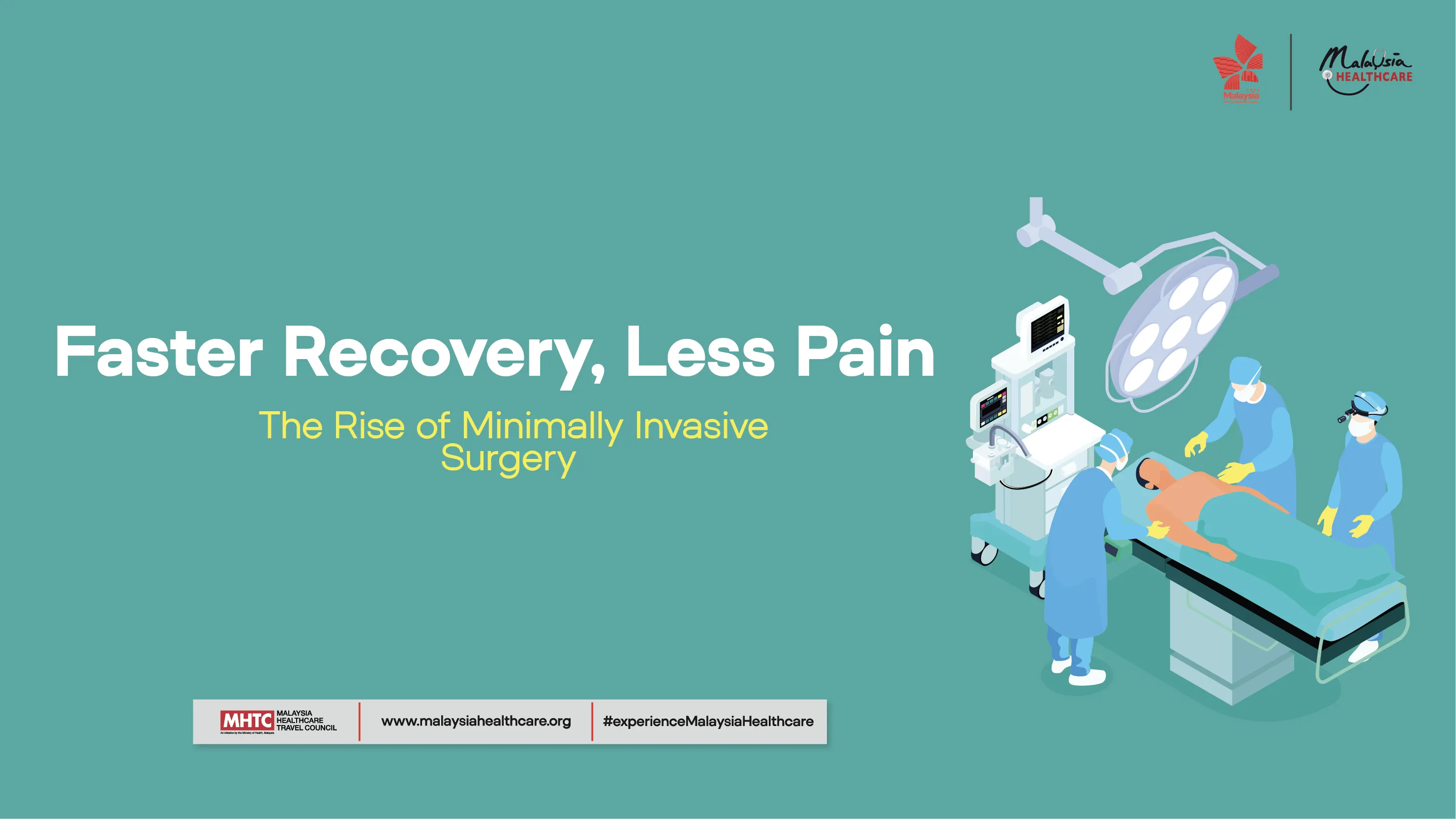
Gone are the days when major surgery meant long hospital stays, large scars, and weeks of painful recovery. Welcome to the era of minimally invasive surgery (MIS), where tiny incisions and advanced technology are transforming medical procedures and dramatically improving patient outcomes.
What Is Minimally Invasive Surgery?
Minimally invasive surgery uses specialised instruments and advanced imaging to perform procedures through small openings, often no larger than a keyhole hence the nickname “keyhole surgery”. The most common types include laparoscopic surgery (using a small camera and instruments through tiny incisions), robotic-assisted surgery (where surgeons control robotic arms with enhanced precision), and endoscopic procedures (using a flexible tube with a camera through natural body openings).
The Game-Changing Benefits
Faster Recovery
The most significant benefit is dramatically reduced recovery time. What once required weeks of recuperation can now have patients back on their feet in days. A traditional gallbladder removal might keep someone off work for four to six weeks, whilst the laparoscopic operation often allows return to normal activities within a week or two.
Less Pain
Smaller incisions mean less trauma and manipulation to muscles and tissues, translating directly into reduced post-operative pain. Many patients require significantly less pain medication, reducing opioid dependency risks and allowing better mobility during recovery.
Lower Complications
With less tissue damage, infection risk drops considerably. Blood loss is minimised, and the risk of surgical site infection is brought down significantly.
Shorter Hospital Stays
Many procedures once requiring multi-day admissions can now be performed as an outpatient basis. This reduces healthcare costs and allows patients to recover with the comfort of home, surrounded by family.
Transforming Healthcare
The scope of MIS continues to expand remarkably. Heart surgery can now be performed through small incisions between the ribs. Joint replacements, spinal fusions, cancer removals, and even brain surgery have all been revolutionised by these techniques.
For medical tourism destinations like Malaysia, MIS holds particular significance. International patients are increasingly drawn to facilities offering these advanced techniques, benefiting from shorter recovery times and reduced complication risks whilst away from home.
The Technology Behind It
High-definition cameras provide surgeons with magnified views often better than what the naked eye could see. Robotic systems offer tremour-free precision, whilst three-dimensional high-definition imaging helps surgeons plan procedures with millimetre accuracy. These technological advances make the seemingly impossible routine.
The Patient Perspective
Consider a patient needing spinal surgery. Traditional approaches might require cutting through multiple muscle layers, resulting in significant pain and long rehabilitation. With minimally invasive techniques, surgeons can access the spine through natural gaps in anatomy, preserving muscle structure and dramatically reducing recovery time.
Minimally invasive surgery represents one of modern medicine's most significant advances. By combining surgical expertise with cutting-edge technology, it delivers what every patient wants: effective treatment with less pain, faster recovery, and better outcomes. As these techniques become increasingly refined and available, more patients worldwide will benefit from this gentler approach to healing, one tiny incision at a time.