

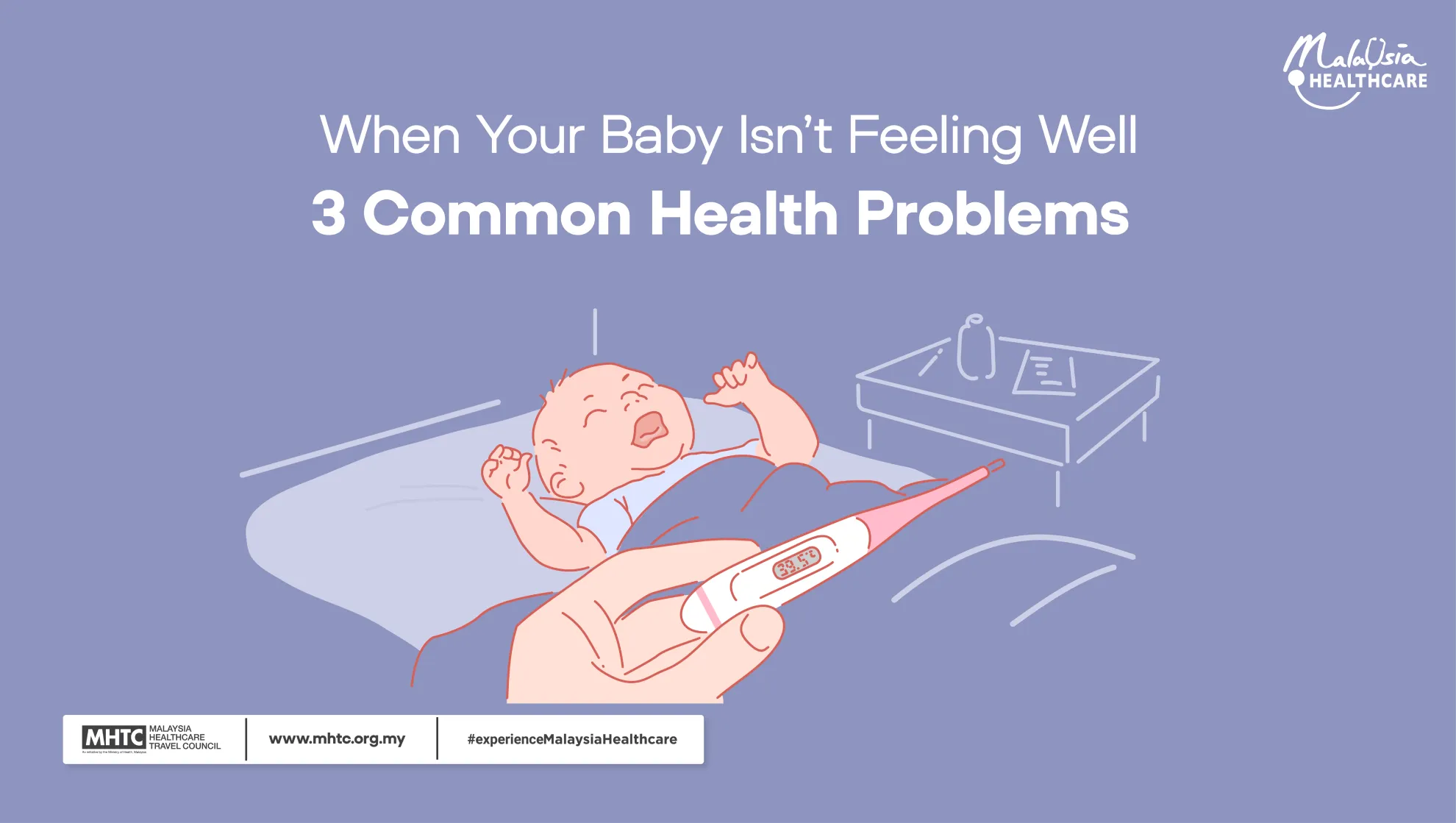
In line with this year’s World Health Day theme, we are shedding light on three common health problems that affect babies - newborn, infant and toddlers. As one of the most vulnerable groups in our society, newborns and infants are especially at risk of developing illnesses that, if left untreated, could lead to serious health complications.
Understanding common baby illnesses and recognising early symptoms can make a big difference. Knowing how to care for a sick baby and when to seek help allows parents and caregivers to act quickly. After all, early intervention is key to ensuring your baby stays healthy and gets the best possible start in life.

Image by freepik , designed on Freepik
Jaundice is very common in newborn babies. It can be identified by the yellow colour on the baby’s skin and eyes.
What causes jaundice?
Buildup of bilirubin in the baby’s blood and when their livers aren’t developed enough to remove the bilirubin. With excess bilirubin, the baby’s skin may look yellow.
How do you know if your baby has jaundice?
Other worrying signs include:
High levels of bilirubin that cause severe jaundice can result in serious complications if not treated. It may lead to kernicterus that may damage the brain.
If you suspect that your baby is having prolonged jaundice (more than 14 days), please seek immediate help from your health providers. Prolonged jaundice may also be associated with hypothyroidism or urinary tract infection.
Colic is frequent and intense crying for no apparent reason in a healthy baby (about 6 weeks old). It commonly happens in the first 6 weeks of the baby’s life and reduces after 3-4 months.
What causes colic?
There are no known causes of colic and it is different among babies. Possible causes are underdeveloped digestive system, food allergies, over/under feeding, family stress or anxiety.
How do you know if your baby has colic?

Image by jcomp , designed on Freepik
Babies may have rashes, hives, acne, birthmarks, etc. This is because babies’ skin is delicate and sensitive, which makes them more prone to skin conditions. Here are some of the most common types, their causes, and how they appear:
Causes: Prolonged moisture and irritation in the diaper area that leads to inflammation and fungal growth.
Symptoms: Red, inflamed skin around diaper area that may be sore or tender
Causes: When sweat glands and ducts become blocked. Babies are more susceptible because of their underdeveloped sweat ducts. It may also be caused by hot and humid climate or wearing multiple layers of clothing.
Symptoms: Itchy, uncomfortable, and prickly rashes
Causes: Hormonal changes or yeast on the skin
Symptoms: Yellow scaly patches with red rash on the baby’s scalp
Causes: Triggered by dry skin, irritants or allergens
Symptoms: This makes the skin itchy, red, and dry that makes the skin more sensitive and prone to infections.
Causes: A highly contagious disease caused by varicella zoster virus.
Symptoms: Itchy, red rash that spreads and may cover most of the body. The rash will turn into blisters with fluid inside. Once it pops, it will form a crusty surface.
Causes: It is a viral infection commonly caused by Coxsackievirus.
Symptoms: There will be red spots on the palms, soles, and around the mouth. These may turn into painful bumps or blisters.
Causes: It is caused by Morbillivirus which is a very contagious virus spread through respiratory droplets.
Symptoms: The baby may have fever, followed by red rash that begins from behind the ears or around the mouth that spreads across the body.
Are you concerned about the risk factors of these diseases for your baby?
You may book an appointment with any of the hospitals or clinics in Malaysia to have a pediatrician to check on your baby.
Need help to find your healthcare provider? View the list of MHTC’s member hospitals in Malaysia here:
https://empowerenglish.edu.vn/mhtc/mhtc-members/
Here at Malaysia Healthcare, we prioritise a patient's entire being, not just their physical symptoms or diagnosis, but taking into account their mental, emotional, social, and even spiritual well-being. This ensures their needs are met holistically with personalised care that supports every aspect of their healing and recovery journey.
References: